Here's why:
* Chemical reactions are complex: They involve the breaking and forming of chemical bonds, leading to the creation of new substances with different properties.
* Multiple observable changes: These changes can be diverse and include:
* Color change: Reactants and products often have different colors.
* Formation of a precipitate: A solid forms from a solution.
* Gas evolution: Bubbles of gas are released.
* Temperature change: Heat is either absorbed (endothermic) or released (exothermic).
* Change in odor: The products may have a distinct smell different from the reactants.
* Light emission: Some reactions produce light (chemiluminescence).
Example:
The reaction between baking soda (sodium bicarbonate) and vinegar (acetic acid) produces:
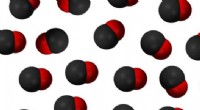
* Gas evolution: Bubbles of carbon dioxide are released.
* Temperature change: The solution gets slightly warmer (exothermic reaction).
* Change in odor: The pungent smell of vinegar disappears, replaced by a milder odor.
Therefore, it's more accurate to say that chemical reactions often involve multiple observable changes, though the specific changes vary depending on the reaction.