Here's why:
* More surface area means more contact points: Reactions happen at the interface between reactants. A larger surface area provides more points of contact between the reactants, allowing more collisions to occur.
* More collisions mean a higher chance of successful reactions: Collisions are essential for chemical reactions to take place. More collisions increase the likelihood that molecules will have the correct orientation and sufficient energy to react.
Examples:
* Powdered sugar dissolves faster than a sugar cube: Powdered sugar has a much larger surface area than a sugar cube, allowing more contact with water molecules and faster dissolution.
* Wood shavings burn faster than a log: Wood shavings have a larger surface area exposed to oxygen, allowing for faster combustion.
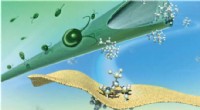
* Catalysts work by increasing surface area: Many catalysts are porous materials with high surface areas. This allows for more reactant molecules to interact with the catalyst, speeding up the reaction.
Exceptions:
While surface area generally increases reaction rate, there are exceptions:
* Reactions limited by diffusion: If the reactants are already in close proximity, increasing surface area may not significantly affect the reaction rate. Diffusion might be the limiting factor in such cases.
* Reactions involving multiple steps: The rate of a multi-step reaction might be controlled by a step that is not influenced by surface area.
Overall, understanding the relationship between surface area and reaction rate is crucial for optimizing reaction conditions, designing efficient catalysts, and predicting reaction outcomes.