Here's why:
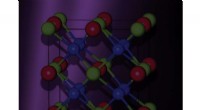
* Ionic Compounds: Beryllium phosphate is an ionic compound, meaning it's formed by the electrostatic attraction between positively charged beryllium ions (Be²⁺) and negatively charged phosphate ions (PO₄³⁻).
* Solubility Rules: Generally, phosphates are insoluble in water, with a few exceptions. Beryllium doesn't fall under those exceptions.
* Polarity: Water is a polar solvent, meaning it has a positive and negative end. For a compound to dissolve in water, it needs to be polar or have a significant ionic character. Beryllium phosphate, despite being ionic, doesn't readily dissolve due to the strong attraction between the beryllium and phosphate ions.
In summary: The strong electrostatic attraction between the beryllium and phosphate ions makes beryllium phosphate highly insoluble in water.