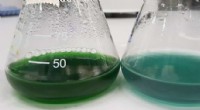
* Dissolving is a physical change: When you dissolve two compounds in a solvent, you're not creating new substances. The individual molecules of the compounds are simply dispersing throughout the solvent. You can usually recover the original compounds by evaporating the solvent.
* Reactions can occur in solution: If the two compounds react chemically when dissolved, then you have a chemical change. This is because new substances are formed with different properties than the original compounds.
Examples:
* Physical Change: Dissolving sugar in water. You can get the sugar back by evaporating the water.
* Chemical Change: Dissolving sodium chloride (table salt) in water, then adding silver nitrate. A chemical reaction occurs, producing a white precipitate of silver chloride (AgCl) and leaving sodium nitrate (NaNO3) in solution.
Key Point: The key distinction lies in whether new chemical bonds are formed or broken. If no new substances are formed, it's a physical change (dissolving). If new substances are formed, it's a chemical change (reaction).