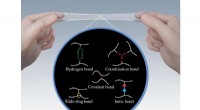
* Water is polar: Water molecules have a slightly positive end (hydrogen atoms) and a slightly negative end (oxygen atom). This polarity allows water molecules to form strong hydrogen bonds with each other.
* Oil is nonpolar: Oil molecules are made up of long chains of hydrocarbons, which are primarily composed of carbon and hydrogen. These chains are not polar and do not have the same charge separation as water molecules.
Why this matters:
* "Like dissolves like": Polar substances tend to dissolve in other polar substances, and nonpolar substances tend to dissolve in other nonpolar substances. This is because the attractive forces between molecules are stronger when they have similar polarities.
* Weak interactions: When oil and water are mixed, the weak attractions between the nonpolar oil molecules and the polar water molecules are not strong enough to overcome the strong hydrogen bonds between water molecules.
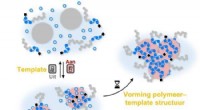
* Separation: As a result, the oil molecules cluster together, forming separate droplets, while the water molecules remain bonded to each other.
In simpler terms: Imagine trying to mix magnets with marbles. The magnets will stick together because they have similar polarities, while the marbles will remain separate because they are different. Similarly, oil and water don't mix because their molecules have different polarities and are not attracted to each other.