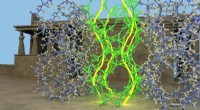
Here are some key characteristics of atomic crystals:
* Strong bonding: The strong bonds between atoms create a rigid, highly stable structure. This results in high melting and boiling points, as a lot of energy is required to break the bonds.
* High density: The close packing of atoms in the crystal structure leads to high density.
* Electrical conductivity: Atomic crystals can exhibit a wide range of electrical conductivity depending on the type of bond. Metallic bonds allow for excellent conductivity, while covalent bonds usually result in insulators or semiconductors.
* Thermal conductivity: Atomic crystals are generally good thermal conductors due to the efficient transfer of heat through the lattice.
* Hardness: Atomic crystals can be very hard due to the strong bonds that hold the atoms together.
Examples of atomic crystals:
* Metals: Metals like copper, gold, and silver form metallic bonds, leading to excellent electrical and thermal conductivity, as well as high ductility and malleability.
* Diamond: Diamond is a covalent crystal with strong, directional bonds between carbon atoms, making it the hardest naturally occurring material.
* Silicon: Silicon is another example of a covalent crystal, with strong bonds between silicon atoms. It's used extensively in semiconductor devices due to its unique electrical properties.
* Germanium: Similar to silicon, germanium forms covalent crystals and is another important semiconductor material.
In summary, atomic crystals are characterized by strong bonding between individual atoms, resulting in rigid, high-density structures with various properties depending on the type of bond present. They are vital components in many technological applications, from electrical conductors to semiconductors and materials with exceptional hardness.