* Size: Water molecules are incredibly small, measuring about 0.27 nanometers in diameter. This is far smaller than the wavelength of visible light, which is about 400-700 nanometers.
* Diffraction Limit: The diffraction limit of light means that light waves cannot be focused to a point smaller than their wavelength. This means a light microscope cannot resolve objects smaller than the wavelength of light.
To view water molecules, you would need a different type of microscope:
* Electron microscopy: Electron microscopes use beams of electrons, which have much shorter wavelengths than visible light. This allows them to achieve resolutions that are orders of magnitude higher than light microscopes, making it possible to image individual atoms.
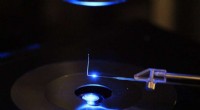
* Atomic force microscopy (AFM): AFM uses a tiny probe to scan a surface. It can create images of surfaces at the atomic scale, revealing the individual atoms that make up a molecule.
Even with these advanced techniques, directly observing a single water molecule in its natural state is incredibly challenging. Water molecules are constantly moving and interacting, making it difficult to capture a stable image.
Instead of viewing a single molecule, scientists typically study water using:
* Spectroscopic techniques: These techniques analyze the interaction of light with water molecules to gain information about their structure and properties.
* Computer simulations: Computer models can be used to simulate the behavior of water molecules at the atomic level, providing insights into their interactions and properties.