Physical Properties:
* Appearance: Color, shape, texture, luster (how it reflects light).
* Density: Mass per unit volume.
* Melting point: The temperature at which a solid changes to a liquid.
* Boiling point: The temperature at which a liquid changes to a gas.
* Solubility: How well a substance dissolves in a particular solvent (like water).
* Conductivity: How well a substance conducts heat or electricity.
* Magnetism: Whether a substance is attracted to a magnet.
Chemical Properties:
* Reactivity: How readily a substance reacts with other substances (e.g., burning, oxidation).
* Combustion: Whether a substance burns and how easily it burns.
* pH: A measure of acidity or alkalinity.
* Flammability: How easily a substance catches fire.
Other Methods:
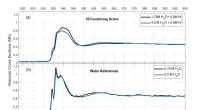
* Spectroscopy: Using light to identify the chemical composition of a substance. This is often used in analytical chemistry.
* Chromatography: Separating components of a mixture based on their different affinities to a stationary phase.
* Microscopy: Using a microscope to examine the structure and shape of a substance at a microscopic level.
* Taste and Smell: (While not always reliable, these can be used to differentiate substances.)
Example:
Let's say you want to tell salt (NaCl) from sugar (C12H22O11). You could use the following properties:
* Taste: Salt is salty, while sugar is sweet.
* Solubility: Both dissolve in water, but salt dissolves much more easily than sugar.
* Melting point: Salt has a much higher melting point than sugar.
Important Note: Always be cautious when experimenting with unknown substances. Some substances can be dangerous or harmful. It is important to use proper safety precautions and only work with substances you are familiar with and understand.