Ionic bonding is the electrostatic attraction between oppositely charged ions formed by the transfer of electrons from a metal to a nonmetal.
Here's why:
* Transfer of Electrons: The defining characteristic of ionic bonding is the complete transfer of electrons from one atom to another.
* Metal and Nonmetal: This transfer typically occurs between a metal (which tends to lose electrons) and a nonmetal (which tends to gain electrons).
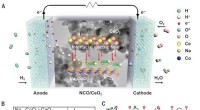
* Ions: The resulting atoms, having gained or lost electrons, become charged particles called ions. The metal becomes a positively charged cation, and the nonmetal becomes a negatively charged anion.
* Electrostatic Attraction: The opposite charges of the ions attract each other strongly, creating the ionic bond.
Let me know if you'd like more details on specific examples or properties of ionic bonding!