Here's why:
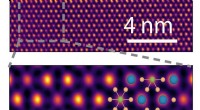
* Orderly arrangement: Crystal structures describe the highly ordered and repeating arrangement of atoms, ions, or molecules within a solid material. This arrangement extends in three dimensions, forming a lattice.
* Long-range order: The repeating pattern of the crystal structure persists over large distances within the solid, unlike the more random arrangement of atoms in liquids or gases.
* Physical properties: The crystal structure of a material plays a crucial role in determining its physical properties, such as:
* Mechanical strength: Stronger bonds and a tightly packed structure contribute to higher hardness and strength.
* Electrical conductivity: The arrangement of atoms can influence the flow of electrons and therefore electrical conductivity.
* Optical properties: The way light interacts with the ordered arrangement of atoms affects how the material absorbs, reflects, or transmits light.
Examples:
* Diamond: A highly ordered crystal structure with strong covalent bonds results in its exceptional hardness and refractive index.
* Salt (NaCl): The cubic arrangement of sodium and chloride ions creates a structure with high melting point and solubility.
* Metals: The close-packed crystal structures of most metals contribute to their malleability and ductility.
In summary, the crystal structure is a defining characteristic of solid materials and plays a critical role in their properties and behavior.