1. Decomposition of Carbonic Acid (H2CO3):
* Reaction: H2CO3(aq) → H2O(l) + CO2(g)
* Explanation: Carbonic acid (H2CO3) is unstable and readily decomposes into water (H2O) and carbon dioxide (CO2). This is a reversible reaction, but the equilibrium strongly favors the formation of water and carbon dioxide. This is why carbonated beverages fizz when opened, releasing CO2 gas.
2. Decomposition of Potassium Chlorate (KClO3):
* Reaction: 2KClO3(s) → 2KCl(s) + 3O2(g)
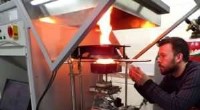
* Explanation: Potassium chlorate (KClO3) decomposes upon heating to produce potassium chloride (KCl) and oxygen gas (O2). This is a common laboratory method for producing oxygen gas. The reaction requires heat to initiate and is exothermic, meaning it releases heat.
Important Notes:
* Decomposition: Decomposition reactions involve breaking down a single compound into two or more simpler substances.
* Conditions: The conditions for decomposition can vary depending on the compound. Some decompositions occur at room temperature, while others require heat, light, or catalysts.