Here's why:
* Weak intermolecular forces: Nonmetals typically have weaker intermolecular forces (like van der Waals forces or hydrogen bonding) compared to metals. These forces hold the atoms together, but they're not as strong as the metallic bonds in metals.
* Lack of free electrons: Unlike metals, nonmetals don't have a "sea" of free electrons that can easily carry heat energy. Their electrons are tightly bound to the atoms, making it difficult for heat to transfer through the material.
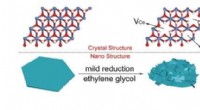
* Disordered structures: Nonmetals often have more disordered structures compared to metals, which have a regular crystalline lattice. This disorder makes it harder for heat to flow in a consistent direction.
Examples:
* Sulfur: Brittle, yellow solid
* Phosphorus: Brittle, white or red solid
* Iodine: Brittle, purple solid
* Diamond: Extremely hard, but also brittle
Note: There are some exceptions. For example, graphite (a form of carbon) is a good conductor of heat, but it's not truly brittle and has a layered structure.