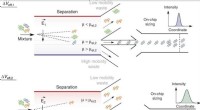
1. Analytical Chemistry: This focuses on identifying and quantifying the components of a sample. Analytical chemists use techniques like spectroscopy, chromatography, and mass spectrometry to analyze everything from food and water to pharmaceuticals and environmental samples.
2. Organic Chemistry: This branch deals with the study of carbon-containing compounds (and their reactions). It forms the foundation for understanding many biological and synthetic molecules, including pharmaceuticals, plastics, and fuels.
3. Physical Chemistry: This area combines the principles of physics and chemistry to understand the physical properties and behavior of molecules and materials. Topics include thermodynamics, kinetics, and quantum mechanics.
These are just a few examples, and there are many more specialized areas of chemistry to explore.