Separating Insoluble Mixtures
* Filtration: This is the most common method for separating insoluble solids from liquids. The mixture is poured through a filter paper (or other porous material). The solid particles are trapped, while the liquid passes through.
* Example: Separating sand from water.
* Decantation: This method involves carefully pouring off the liquid from a mixture, leaving the solid behind. This works best when the solid settles to the bottom of the container.
* Example: Separating oil from water (oil floats on top).
* Evaporation: Used to separate a dissolved solid from a liquid. The mixture is heated, causing the liquid to evaporate, leaving the solid behind.
* Example: Separating salt from saltwater.
* Magnetism: If one component of the mixture is magnetic (like iron filings), a magnet can be used to separate it from the other components.
* Example: Separating iron filings from sand.
* Sieving: This method uses a sieve with holes of a specific size to separate particles based on their size.
* Example: Separating pebbles from sand.
Separating Soluble Mixtures
* Evaporation: This method, similar to the one used for insoluble mixtures, is used to separate dissolved solids from liquids. The liquid is heated, evaporating, leaving the solid behind.
* Example: Separating salt from saltwater.
* Distillation: This method separates liquids with different boiling points. The mixture is heated, and the liquid with the lower boiling point vaporizes first. This vapor is then condensed and collected separately.
* Example: Separating water from alcohol (alcohol has a lower boiling point).
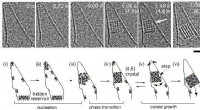
* Crystallization: This method involves dissolving a solid in a solvent (usually water) and then allowing the solvent to evaporate slowly. The dissolved solid crystallizes out of the solution, forming pure crystals.
* Example: Obtaining pure sugar crystals from a sugar solution.
* Chromatography: This method separates mixtures based on the different affinities of the components for a stationary phase (like paper) and a mobile phase (like a solvent). Components with a stronger affinity for the stationary phase move slower, resulting in separation.
* Example: Separating pigments in ink.
Important Note: Some methods can be combined to separate complex mixtures. For example, you might use filtration followed by evaporation to isolate a specific solid from a mixture.