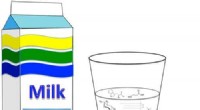
* What reaction? Sugar doesn't just spontaneously produce gas. It needs to undergo a chemical reaction. Common reactions involving sugar include:
* Combustion: Burning sugar in the presence of oxygen produces carbon dioxide (CO2) and water vapor (H2O).
* Fermentation: Yeast can break down sugar into ethanol (C2H5OH) and carbon dioxide.
* Conditions: The volume of gas produced depends on the conditions, including:
* Temperature: Higher temperatures lead to greater gas volume.
* Pressure: Higher pressures reduce gas volume.
To calculate the volume of gas, you would need to know:
1. The specific reaction: What is the chemical reaction that's occurring?
2. The reaction conditions: Temperature and pressure.
Example:
Let's say we are burning 4 grams of sugar (C12H22O11) completely in the presence of oxygen at 25°C and 1 atm pressure (standard conditions). The balanced chemical equation is:
C12H22O11 + 12O2 → 12CO2 + 11H2O
From this, we can calculate:
1. Moles of sugar: 4 g / 342.3 g/mol = 0.0117 moles (molar mass of sugar)
2. Moles of CO2 produced: 0.0117 moles * 12 = 0.14 moles (12 moles of CO2 are produced per mole of sugar)
3. Volume of CO2 at STP: 0.14 moles * 22.4 L/mol = 3.14 L (using the ideal gas law at standard temperature and pressure)
Therefore, burning 4 grams of sugar at standard conditions would produce approximately 3.14 liters of CO2.
If you provide the specific reaction and conditions, I can help you calculate the volume of gas produced.