Here's why:
* Hydrophobic means "water-fearing". These substances are non-polar, meaning they lack a positive and negative end like water molecules.
* Water is a polar molecule, meaning it has a slightly positive end and a slightly negative end due to the uneven sharing of electrons.
* Polar molecules attract other polar molecules, and non-polar molecules attract other non-polar molecules.
* When a hydrophobic substance is placed in water, the water molecules try to surround the hydrophobic substance, but they cannot form strong bonds because of the lack of polarity.
* This causes the hydrophobic substance to clump together, minimizing contact with the water, and it does not dissolve.
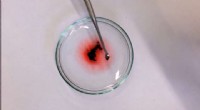
Think of it this way: Imagine trying to mix oil and water. Oil is hydrophobic and will separate from the water, forming distinct layers. This is because the oil molecules are non-polar and cannot form strong bonds with the polar water molecules.