Here's why:
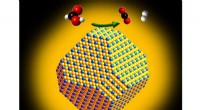
* Crystalline solids have a highly ordered, repeating pattern of particles (think of a perfect, symmetrical crystal structure). This order extends throughout the entire solid.
* Amorphous solids, on the other hand, lack this long-range order. Their particles are arranged in a more random, disorganized fashion.
Examples of amorphous solids:
* Glass: While it feels solid, glass is actually a very viscous liquid. Its molecules are arranged in a disordered way, giving it its characteristic brittleness and lack of a defined melting point.
* Rubber: Rubber is flexible and can stretch because its molecules are randomly intertwined.
* Plastic: Many plastics are amorphous, with molecules arranged in a non-repeating pattern.
* Gelatin: This protein-based substance forms a disordered solid structure.
It's important to note that even within amorphous solids, there might be some local order, but this order doesn't extend throughout the entire material like it does in crystalline solids.