Here's why:
* Water is a small molecule: Water (H₂O) is actually a very small molecule, not large.
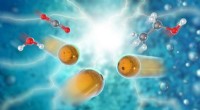
* Polarity is key: Water's ability to dissolve many substances is primarily due to its polarity. The oxygen atom in water has a partial negative charge, while the hydrogen atoms have partial positive charges. This creates a dipole moment, making water a polar molecule.
* Like dissolves like: Polar molecules like water readily dissolve other polar molecules, such as salts and sugars.
* Hydrogen bonding: Water's polarity allows it to form hydrogen bonds with other polar molecules, further enhancing its ability to dissolve them.
Therefore, water's small size and its polar nature, along with its ability to form hydrogen bonds, are the main reasons it is considered a universal solvent.
While water can dissolve many substances, it's important to note that it's not truly a universal solvent. Some substances, like oils and fats, are nonpolar and do not dissolve readily in water.