Physical Mixtures
* Yes, they can be separated physically.
* In physical mixtures, the substances are simply mixed together, but their individual properties remain unchanged.
* Examples:
* Sand and salt: Separated by sieving.
* Iron filings and sand: Separated by using a magnet.
* Salt and water: Separated by evaporation.
Chemical Compounds
* No, they cannot be separated physically.
* In chemical compounds, the substances chemically react to form new substances with different properties.
* Examples:
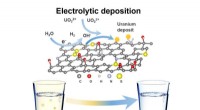
* Water (H2O): A compound of hydrogen and oxygen. Separating it into its elements requires electrolysis (chemical process).
* Salt (NaCl): A compound of sodium and chlorine. Separating it requires electrolysis.
Important Notes:
* Mixtures can be heterogeneous or homogeneous.
* Heterogeneous mixtures: Substances are not evenly distributed (e.g., sand and water).
* Homogeneous mixtures: Substances are evenly distributed (e.g., salt water).
* The methods of physical separation depend on the specific substances involved.
* Some separation techniques involve a combination of physical and chemical processes. For example, distillation uses both boiling (physical) and condensation (physical).
In short, if the combined substance is a mixture, it can be separated physically. If it's a compound, it requires a chemical process.