* Reactivity: Iron is a reactive metal. This means it readily reacts with other substances.
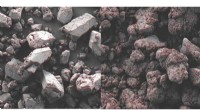
* Oxidation: The most common reaction is with oxygen in the air, leading to the formation of iron oxide (rust). This is a chemical change that weakens the nail.
* Reaction with Acids: Iron reacts with acids, releasing hydrogen gas.
* Corrosion: Iron is susceptible to corrosion, particularly in the presence of moisture and oxygen. Rust is a form of corrosion.
* Magnetic Properties: Iron is a ferromagnetic material, meaning it is strongly attracted to magnets and can be magnetized itself.
* Melting Point: Iron has a high melting point of 1538 °C (2800 °F).
* Boiling Point: Iron has a high boiling point of 2750 °C (4982 °F).
* Density: Iron has a density of 7.874 g/cm³.
These chemical properties make iron useful for many applications, but also require consideration in its use, especially when exposed to the environment.