1. Evaporation:
* Goal: Remove the water, leaving behind glycerol and salt.
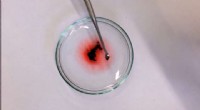
* Method: Carefully heat the solution in an open container (like a beaker). The water will evaporate, leaving a thick, syrupy mixture of glycerol and salt.
* Caution: Glycerol has a high boiling point, so you'll need to heat the mixture for a long time to evaporate all the water. Be careful not to overheat the glycerol, as it can decompose at high temperatures.
2. Extraction with a Non-Polar Solvent:
* Goal: Separate glycerol from the salt.
* Method:
* Add a non-polar solvent like diethyl ether or hexane to the remaining mixture of glycerol and salt. Glycerol is polar and will remain in the water layer, while the salt will dissolve in the non-polar solvent.
* Separate the two layers using a separatory funnel. The water layer will contain the glycerol, and the non-polar solvent layer will contain the salt.
* Evaporate the non-polar solvent to recover the salt.
* Caution: This method is more complex and requires care to avoid contamination.
3. Distillation:
* Goal: Separate the glycerol and water.
* Method:
* Distillation relies on the difference in boiling points between glycerol and water.
* The solution is heated, and the water, which has a lower boiling point, vaporizes first. The vapor is then condensed and collected separately.
* Glycerol will remain in the distillation flask.
* Caution: This method requires specialized equipment and careful control of temperatures.
4. Chromatography (for analytical purposes):
* Goal: Separate and analyze the components of the solution.
* Method:
* Techniques like thin-layer chromatography (TLC) or gas chromatography (GC) can be used to separate and identify the individual components of the mixture.
* Caution: These methods are more suited for analysis rather than large-scale separation.
Which method to choose depends on your goals:
* If you need to isolate the glycerol, evaporation followed by extraction is a good option.
* If you want to obtain pure water, distillation is the best choice.
* If you are interested in identifying the individual components, chromatography is suitable.
Important Safety Notes:
* Always wear appropriate safety gear, including gloves and goggles, when handling chemicals.
* Work in a well-ventilated area.
* Be aware of the hazards associated with each chemical used.