Solids:
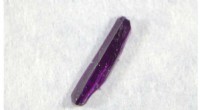
* Generally contract: When solids cool, their particles slow down and vibrate less. This means they occupy less space, and the material shrinks in volume.
* Exceptions: There are some exceptions, like water. Water expands when it freezes (becomes ice), which is why ice floats.
Liquids:
* Generally contract: Like solids, liquids contract when cooled as their particles slow down. This is why a cold drink in a glass appears to have a slightly lower level than when it was warm.
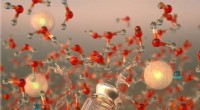
* Water again: Water is an exception again. Liquid water expands as it cools from 4°C to 0°C, which is why ice floats.
Gases:
* Always contract: Gases are highly compressible. When cooled, their particles move slower and collide less frequently. This leads to a significant decrease in volume. Think about how a balloon deflates when placed in a freezer.
Key Point: The change in volume is related to the kinetic energy of the particles. As temperature decreases, kinetic energy decreases, causing particles to move slower and occupy less space.