Anions
* Definition: An anion is a negatively charged ion. This means it has more electrons than protons.
* Examples: Common anions include chloride (Cl-), bromide (Br-), fluoride (F-), and hydroxide (OH-).
Liquid inside Anions
There's a slight misunderstanding in the question. Anions themselves are not hollow objects that contain liquid. They are individual atoms or groups of atoms that have gained extra electrons, giving them a negative charge.
Where Liquids Might Be Involved
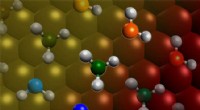
* Solutions: Anions often exist in solutions like salt water. The water molecules surround the ions, keeping them dissolved.
* Electrolytes: Solutions containing ions are called electrolytes. These are essential for conducting electricity in living organisms and in batteries.
Let's clarify the concept:
Imagine a group of kids playing. Each kid represents an atom. Some kids might be "neutral" (equal number of protons and electrons). Some kids might have picked up a few extra marbles (electrons), making them negatively charged (anions). There's no "liquid" inside the kids, just the extra marbles giving them a negative charge.
If you're interested in specific aspects of anions or how they interact with liquids, let me know!