Key Points:
* Phase Change: Condensation is a phase change, meaning the substance changes its physical state.
* Energy Loss: Gas molecules have more energy than liquid molecules. For condensation to occur, the gas must lose energy, usually through cooling.
* Molecule Interaction: As gas molecules slow down, they experience stronger intermolecular forces, causing them to stick together and form a liquid.
Examples of Condensation:
* Dew Formation: When the air cools down overnight, water vapor in the air condenses on surfaces, forming dew.
* Cloud Formation: Water vapor in the atmosphere condenses around tiny particles (like dust), forming clouds.
* Breathing: When we exhale, the warm, moist air from our lungs condenses on cooler surfaces, like a mirror or window.
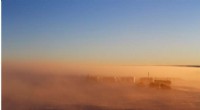
* Fog: Condensation of water vapor near the ground forms fog.
* Boiling Water: When water boils, it changes from liquid to gas (steam). Condensation occurs when the steam cools and changes back into liquid water droplets.
Importance of Condensation:
Condensation plays a crucial role in many natural processes, including:
* Water Cycle: Condensation is a key part of the water cycle, as it allows water vapor in the atmosphere to return to the Earth's surface as rain, snow, or other forms of precipitation.
* Climate Regulation: Condensation and cloud formation influence Earth's temperature and climate patterns.
* Biological Processes: Condensation is important for many biological processes, such as respiration and transpiration in plants.
I hope this helps!