The understanding of acids and bases has evolved over time, resulting in various theories that explain their properties and reactions:
1. Arrhenius Theory (1884):
* Definition:
* Acids: Substances that produce hydrogen ions (H+) in aqueous solution.
* Bases: Substances that produce hydroxide ions (OH-) in aqueous solution.
* Strengths:
* Simple and easy to understand.
* Explains the properties of many common acids and bases.
* Limitations:
* Only applicable to aqueous solutions.
* Doesn't explain the behavior of some substances that act as acids or bases in non-aqueous solvents.
2. Brønsted-Lowry Theory (1923):
* Definition:
* Acids: Proton donors (H+).
* Bases: Proton acceptors.
* Strengths:
* More general than the Arrhenius theory.
* Explains acid-base reactions in non-aqueous solvents.
* Introduces the concept of conjugate acid-base pairs.
* Limitations:
* Doesn't explain the behavior of some substances that act as acids or bases without involving protons.
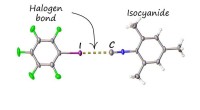
3. Lewis Theory (1923):
* Definition:
* Acids: Electron pair acceptors.
* Bases: Electron pair donors.
* Strengths:
* Most general theory.
* Explains acid-base reactions involving species that do not contain hydrogen or hydroxide ions.
* Limitations:
* More abstract than the other theories, making it less intuitive for beginners.
Other Theories:
* Usanovich Theory: Extends the Lewis theory to include reactions involving electron transfer and oxidation-reduction.
* Lux-Flood Theory: Focuses on acid-base reactions in molten salts and oxides.
Key Concepts:
* pH: A measure of the acidity or basicity of a solution, with a pH of 7 being neutral, less than 7 being acidic, and greater than 7 being basic.
* Neutralization: The reaction between an acid and a base, producing salt and water.
* Titration: A technique to determine the concentration of an unknown solution by reacting it with a solution of known concentration.
* Buffers: Solutions that resist changes in pH upon addition of small amounts of acid or base.
Applications:
The understanding of acids and bases is essential in many fields, including:
* Chemistry: Understanding chemical reactions, predicting products, and controlling reaction conditions.
* Biology: Regulating pH balance in living organisms and understanding enzyme activity.
* Medicine: Developing drugs and therapies, and analyzing body fluids.
* Environmental science: Understanding acid rain and water pollution.
Conclusion:
The various theories of acids and bases provide a comprehensive understanding of their behavior and reactions. Each theory offers different perspectives and limitations, contributing to the overall knowledge of these fundamental chemical concepts.