Parts of an Atom
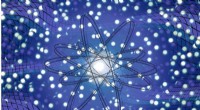
1. Protons: Positively charged particles found in the atom's nucleus. The number of protons determines the element. For example, all carbon atoms have 6 protons.
2. Neutrons: Neutral particles also located in the nucleus. Neutrons contribute to the atom's mass but don't affect its charge. The number of neutrons can vary within an element, creating isotopes.
3. Electrons: Negatively charged particles that orbit the nucleus in specific energy levels called electron shells. Electrons are involved in chemical bonding and determine an atom's reactivity.
Changes in Atoms
1. Isotopes: Atoms of the same element with different numbers of neutrons. For example, carbon-12 has 6 neutrons, while carbon-14 has 8 neutrons. Isotopes have the same chemical properties but different physical properties (like radioactive decay).
2. Ions: Atoms that have gained or lost electrons, resulting in a net positive or negative charge. Cations are positively charged ions (lost electrons), while anions are negatively charged ions (gained electrons).
3. Nuclear Reactions: Processes that involve changes in the nucleus of an atom. This includes:
* Radioactive decay: Unstable isotopes release energy and particles to become more stable.
* Nuclear fusion: Two light nuclei combine to form a heavier nucleus, releasing immense energy (like in stars).
* Nuclear fission: A heavy nucleus splits into lighter nuclei, releasing energy (used in nuclear power plants).
Important Note: Changes in the number of protons change the atom's identity, meaning it becomes a different element.