* Atom: The fundamental building block of all matter. An atom is made up of a dense, positively charged nucleus containing protons and neutrons, surrounded by a cloud of negatively charged electrons.
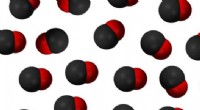
* Element: Each element is defined by the number of protons in its atom's nucleus. This number is called the atomic number. For example, all carbon atoms have 6 protons, while all oxygen atoms have 8 protons.
* Pure Substance: An element is a pure substance because it contains only one type of atom. It cannot be broken down into simpler substances by ordinary chemical means.
Key Characteristics of Chemical Elements:
* Unique Atomic Number: Each element has a unique atomic number, distinguishing it from all other elements.
* Characteristic Properties: Elements have specific physical and chemical properties. For example, gold is shiny and malleable, while oxygen is a colorless gas.
* Found in Periodic Table: Elements are organized in the periodic table based on their atomic number and chemical properties.
Examples of Chemical Elements:
* Carbon (C): The basis of life on Earth, found in organic molecules.
* Oxygen (O): Essential for respiration, found in the air we breathe.
* Hydrogen (H): The lightest element, abundant in the universe and water.
* Gold (Au): A precious metal, known for its luster and resistance to corrosion.
Key Point: Elements are the fundamental building blocks of all matter. They combine in various ways to form molecules and compounds, creating the vast diversity of substances we see around us.