General Observations:
* Spacing: Vapor molecules are far apart compared to the molecules in a liquid or solid. So, you'd see a lot of empty space between the individual molecules.
* Movement: Vapor molecules are in constant random motion, moving much faster than molecules in a liquid. This could appear as a blur or a rapid, chaotic movement.
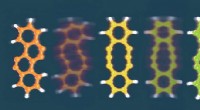
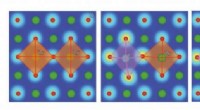
* Individuality: Depending on the instrument's resolution, you might be able to distinguish individual molecules. This would depend on the size of the molecules and the instrument's capabilities.
Specific Examples:
* Water vapor: Water molecules are relatively small. Under a powerful microscope, you might see tiny dots moving rapidly and randomly.
* Metal vapor: Metal atoms are larger than water molecules. They might appear as larger, blurrier dots, or even as small clumps of atoms.
Important Considerations:
* The instrument: Different instruments have different capabilities. A light microscope might only show a blurry image, while a scanning tunneling microscope could provide atomic-scale resolution.
* The substance: The type of vapor will significantly affect its appearance.
In conclusion: The appearance of vapor under a microscope depends on the specific instrument, the type of vapor, and the resolution of the image. However, you can generally expect to see widely spaced, rapidly moving molecules.