Here's why:
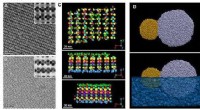
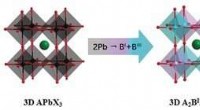
* Lattice Structure: A lattice structure is a highly ordered, repeating arrangement of particles (atoms, ions, or molecules) in three dimensions. This arrangement creates a regular, geometric pattern.
* Crystalline Solids: These solids have a distinct, repeating pattern of their constituent particles, giving them a well-defined shape and a high degree of symmetry.
Examples of crystalline solids include:
* Salt (NaCl): Its ions are arranged in a cubic lattice.
* Diamond: Its carbon atoms form a tetrahedral lattice.
* Quartz (SiO2): Its silicon and oxygen atoms form a complex lattice.
Key Features of Crystalline Solids:
* Sharp melting points: Because of their rigid structure, they melt at a specific temperature.
* Anisotropy: Their properties can vary depending on the direction in which they are measured (e.g., a crystal might be harder in one direction than another).
* Cleavage: They can break along specific planes, producing flat surfaces.
In contrast to crystalline solids, amorphous solids lack a well-defined, repeating structure. Their particles are randomly arranged, leading to properties like:
* No sharp melting point: They soften gradually over a range of temperatures.
* Isotropy: Their properties are the same in all directions.
* Fracture: They break irregularly, producing jagged edges.