1. Activation Energy:
* Every chemical reaction requires a certain amount of energy to start. This is called the activation energy. It's the energy needed to break the bonds of reactants and allow them to form new products.
* Imagine a hill: The activation energy is the height of the hill the reactants need to climb to reach the products on the other side.
2. The Catalyst's Role:
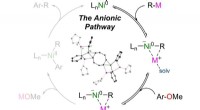
* A catalyst provides a different pathway for the reaction to occur. This new pathway has a lower activation energy, like finding a tunnel through the hill instead of climbing over it.
* The catalyst forms temporary bonds with the reactants, changing their shape and making them more reactive. This allows the reaction to proceed with less energy input.
3. Result:
* Since the activation energy is lowered, more reactant molecules have enough energy to react at a given temperature.
* This leads to a faster rate of reaction without being consumed itself. The catalyst remains unchanged at the end of the reaction, ready to catalyze more reactions.
Analogy:
Think of a crowded room with a single narrow doorway. People need to push and shove to get through, slowing down the flow. A catalyst is like opening another wider doorway, allowing people to move through more easily and quickly.
Important Points:
* Catalysts do not change the equilibrium of a reaction, they only speed up the process of reaching equilibrium.
* They are highly specific to the reactions they catalyze.
* They can be used in both forward and reverse reactions.
In conclusion, a catalyst speeds up a reaction by lowering the activation energy barrier, allowing more reactant molecules to reach the transition state and form products more quickly.