1. Silver's Electronic Configuration:
* Silver (Ag) has an atomic number of 47, meaning it has 47 protons and 47 electrons.
* Its electronic configuration is [Kr] 4d¹⁰ 5s¹. This means its outermost shell (the 5th shell) has only one valence electron.
2. Types of Bonding:
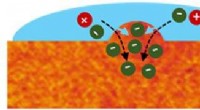
* Metallic Bonding: Silver, being a metal, primarily forms metallic bonds with other silver atoms. In metallic bonding, the valence electrons are delocalized, forming a "sea" of electrons that move freely throughout the entire metal structure. This creates strong attractions between the positively charged metal ions and the negatively charged electron sea, resulting in a strong and stable bond.
* Covalent Bonding: Silver can also form covalent bonds with nonmetals, such as in silver halides (AgCl, AgBr, AgI). In covalent bonding, silver shares its valence electron with the nonmetal atom, creating a shared electron pair.
3. Electron Participation in Bonding:
* Metallic Bonding: In metallic silver, the single valence electron in the 5s orbital detaches from the silver atom and joins the sea of electrons. This shared electron pool contributes to the excellent electrical and thermal conductivity of silver.
* Covalent Bonding: In covalent bonding, the single valence electron of silver pairs up with an electron from the nonmetal atom to form a shared electron pair. This sharing creates a stable covalent bond.
In summary: The valence electrons of silver are crucial for forming chemical bonds. In metallic bonding, they delocalize to form a sea of electrons, while in covalent bonding, they are shared with other atoms. This electron behavior contributes to the unique properties of silver, including its conductivity, malleability, and reactivity.