Here's why:
* Supersaturated solutions hold more solute than they normally can at a given temperature. This is an unstable state.
* Disturbance acts as a trigger. The disturbance can be anything from shaking the container, scratching the inside, or even adding a tiny seed crystal.
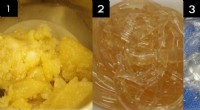
* Crystallization: The disturbance provides nucleation sites, allowing the excess solute to quickly crystallize out of the solution, forming crystals.
Examples of supersaturated solutions:
* Sugar solution - Making rock candy is a classic example.
* Salt solution - You can make salt crystals by carefully evaporating a supersaturated salt solution.
Key point: A solution only becomes supersaturated if you've carefully dissolved more solute than it normally would hold at that temperature.