1. Cooling: When gas particles are cooled, they lose kinetic energy, causing them to move slower.
2. Reduced Space: As the particles slow down, the attractive forces between them become stronger relative to their kinetic energy. These attractive forces pull the particles closer together.
3. Close Proximity: As the particles get closer, they start to interact more frequently, forming temporary bonds.
4. Formation of Liquid: As the cooling continues, the particles become tightly packed together, forming a more ordered structure characteristic of liquids.
Factors Affecting Condensation:
* Temperature: Lower temperatures lead to a higher rate of condensation.
* Pressure: Increased pressure forces gas particles closer together, increasing the likelihood of condensation.
* Intermolecular forces: Stronger intermolecular forces between gas particles lead to easier condensation.
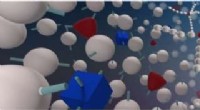
Visualizing Condensation:
Imagine a cloud forming in the sky. The water vapor in the air cools as it rises, causing the water molecules to slow down and clump together, forming tiny water droplets, which we see as a cloud.
In summary, condensation is a process where gas particles lose energy, slow down, and are pulled closer together by intermolecular forces, ultimately forming a liquid state.