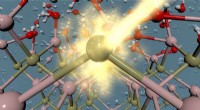
* Network structures are characterized by strong covalent bonds extending throughout the entire structure. These bonds are very difficult to break, leading to extremely high melting and boiling points. Think of materials like diamond (melting point >3500°C) or quartz (melting point ~1600°C).
* Individual molecules are held together by weaker intermolecular forces like van der Waals forces, hydrogen bonding, or dipole-dipole interactions. These forces are much easier to overcome, resulting in lower boiling points.
A boiling point of 68°C is relatively low, suggesting that the compound is held together by weaker intermolecular forces and therefore likely exists as individual molecules.
Example: Water has a boiling point of 100°C. It's a simple molecule (H₂O) held together by hydrogen bonds, which are relatively strong intermolecular forces.
Keep in mind: There are always exceptions, and it's important to consider other factors like molecular weight and the presence of specific functional groups. However, as a general rule, a boiling point of 68°C strongly suggests individual molecules rather than a network structure.