* Storing and transporting water: This is its most basic function, essential for hydration in a lab setting.
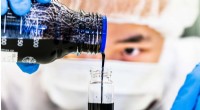
* Rinsing glassware: A water bottle is often used to rinse glassware with distilled water, which removes any impurities or residues before use.
* Adding water to experiments: In some cases, you might add distilled water from a water bottle to experiments that require it.
However, it's not ideal for precise measurements or reactions due to its lack of markings and potential for contamination.
Therefore, a water bottle is considered a general utility item in a chemistry lab, not a dedicated piece of equipment for specific reactions or measurements.