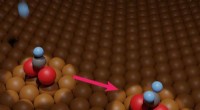
Here's a breakdown of the key components:
* Collision: For a chemical reaction to occur, reactant molecules must physically collide with each other.
* Energy: The colliding molecules must possess a minimum amount of kinetic energy, known as the activation energy (Ea). This energy is required to break the existing bonds in the reactants and allow the formation of new bonds in the products.
* Orientation: The colliding molecules must also have the correct orientation relative to each other. This means that the atoms involved in bond formation must be positioned in a way that facilitates the reaction.
Here's how it works:
1. Collision: Reactant molecules move randomly and collide with each other.
2. Activation Energy: Only collisions with sufficient energy (Ea) will be successful in breaking bonds and forming new ones.
3. Orientation: Even with enough energy, the colliding molecules must have the correct orientation for the reaction to occur.
Factors affecting the rate of reaction based on Collision Theory:
* Concentration: Higher concentrations lead to more collisions, increasing the rate of reaction.
* Temperature: Higher temperatures increase the average kinetic energy of molecules, leading to more collisions with sufficient energy (Ea), and thus a faster rate of reaction.
* Surface Area: Increased surface area provides more opportunities for collisions, accelerating the rate of reaction.
* Catalyst: Catalysts lower the activation energy (Ea), making it easier for molecules to react and increasing the reaction rate.
The Collision Theory is a fundamental principle in understanding chemical kinetics, providing a framework for predicting and controlling reaction rates.