Purification and Separation:
* Purification of solids: Sublimation is used to purify solids, especially those that decompose or react at their melting point. For instance, purifying iodine, camphor, and naphthalene.
* Separation of mixtures: Sublimation can separate substances with different sublimation points. This is particularly useful for separating volatile compounds from non-volatile ones.
* Chromatography: Sublimation is used in techniques like sublimation chromatography to separate and analyze mixtures.
Material Synthesis and Characterization:
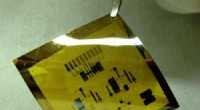
* Thin film deposition: Sublimation is used in vacuum deposition techniques to deposit thin films of various materials, like metals, semiconductors, and organic materials. This is crucial in manufacturing solar cells, microchips, and other electronic devices.
* Crystal growth: Sublimation can be used to grow single crystals of various materials, such as organic compounds, by carefully controlling the sublimation and deposition process.
* Material analysis: Sublimation is used in techniques like thermogravimetric analysis (TGA) to study the thermal decomposition and stability of materials.
Other Applications:
* Freeze-drying: Sublimation is the core principle behind freeze-drying, a technique used to preserve food and biological materials. This process removes water by freezing the material and then sublimating the ice under vacuum.
* Forensic science: Sublimation is used to analyze trace evidence, such as fingerprints or drug residues, by sublimating them and detecting the resulting vapors.
* Industrial processes: Sublimation is used in various industrial processes, such as the production of dyes, pigments, and pharmaceuticals.
Examples:
* Purification of iodine: Iodine is purified by heating it in a closed container. The solid iodine sublimates, forming a gas that can be collected and then condensed back into solid form, leaving impurities behind.
* Freeze-drying of coffee: Freeze-drying is used to preserve coffee by removing water through sublimation. This produces a highly concentrated and flavorful coffee that can be easily reconstituted.
In summary, sublimation is a versatile technique with various applications in chemistry, from purification and separation to material synthesis and characterization. Its unique nature allows for the handling of delicate substances, separation of mixtures, and fabrication of advanced materials.