* Metallic Nature: Copper is a metal, and metals tend to lose electrons to form positively charged ions (cations).
* Electronegativity: Copper has a relatively low electronegativity, meaning it doesn't strongly attract electrons.
* Bonding with Nonmetals: Copper usually forms bonds with nonmetals, which have higher electronegativity. The significant difference in electronegativity between copper and nonmetals leads to the transfer of electrons, resulting in ionic bonds.
Example:
* Copper (Cu) reacts with oxygen (O) to form copper oxide (CuO). In this compound, copper loses electrons to form Cu²⁺ ions, and oxygen gains electrons to form O²⁻ ions. These oppositely charged ions are held together by electrostatic forces, forming an ionic bond.
Exceptions:
While copper predominantly forms ionic compounds, there are a few exceptions where it can participate in covalent bonding:
* Organocopper Compounds: These compounds involve copper bonded directly to carbon atoms, often with organic ligands.
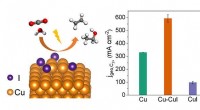
* Copper Halides: Copper can form covalent bonds with halogens (fluorine, chlorine, bromine, iodine) to a certain extent.
In summary: Copper primarily forms ionic compounds due to its metallic nature and electronegativity. However, it can participate in covalent bonding in specific situations, particularly in organocopper compounds and to a lesser extent with halogens.