Here's how it works:
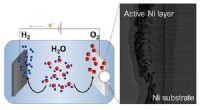
1. Electrolysis Setup: A direct electric current is passed through water. This is done by immersing two electrodes (usually made of an inert material like platinum) into the water and connecting them to a power source.
2. Decomposition: When the current flows, it provides the energy needed to break the chemical bonds holding the hydrogen and oxygen atoms together in water molecules.
3. Gas Evolution:
* Hydrogen (H₂) gas is produced at the negative electrode (cathode) as hydrogen ions (H+) gain electrons.
* Oxygen (O₂) gas is produced at the positive electrode (anode) as oxygen ions (O²-) lose electrons.
The Chemical Reaction:
The overall electrolysis reaction can be represented as:
2H₂O (l) → 2H₂ (g) + O₂ (g)
Important Notes:
* Pure Water: Electrolysis works best with slightly acidic or basic water, as pure water is a poor conductor of electricity.
* Safety: Electrolysis can be dangerous if not performed correctly. Always use appropriate safety precautions, especially when dealing with electricity and flammable gases.
Applications of Electrolysis:
* Hydrogen Production: Electrolysis is a promising method for producing hydrogen as a clean fuel.
* Oxygen Production: Electrolysis can be used to generate oxygen for various industrial applications.
* Water Purity: Electrolysis can be used to purify water by removing dissolved impurities.
Let me know if you have any other questions!