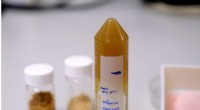
1. Transparency: Liquids, especially clear solutions, allow light to pass through them. This is essential for spectrophotometry, where the instrument measures the amount of light that passes through the sample.
2. Homogeneity: Solutions tend to be homogeneous, meaning the solute is evenly distributed throughout the solvent. This ensures that the light beam passing through the solution interacts with a consistent concentration of the analyte.
3. Ease of Handling: Liquids are relatively easy to handle and manipulate in the laboratory. They can be easily transferred to cuvettes, the specialized containers used in spectrophotometers.
4. Control of Concentration: The concentration of the analyte in a solution can be precisely controlled by dilution. This is crucial for obtaining accurate and reproducible spectrophotometric measurements.
5. Suitable for a Wide Range of Analytes: Many substances, both organic and inorganic, can be dissolved in suitable solvents, making them amenable to spectrophotometric analysis.
6. Quantitative Analysis: By measuring the amount of light absorbed or transmitted through a solution, spectrophotometers allow us to quantify the concentration of specific components in a sample.
7. Specificity: Each analyte has a unique absorbance spectrum, meaning it absorbs light at specific wavelengths. This allows us to differentiate and identify different substances in a mixture.
Examples of Liquid Solutions Used in Spectrophotometry:
* Protein solutions: To determine protein concentration in biological samples.
* DNA and RNA solutions: For analyzing nucleic acid concentrations and purity.
* Chemical solutions: For various applications, such as measuring enzyme activity, monitoring chemical reactions, and determining the concentration of specific ions.
* Biological samples: Blood, urine, and other bodily fluids can be analyzed after appropriate processing.
In Summary: Liquid solutions offer transparency, homogeneity, ease of handling, and controllability, making them the ideal medium for spectrophotometric analysis. This technique provides a powerful tool for quantifying, identifying, and studying various substances in a wide range of scientific fields.