Here's a breakdown of why this is true:
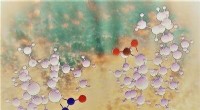
* Atoms are not created or destroyed: In a chemical reaction, atoms are simply rearranged. They don't disappear or magically appear.
* Mass is a measure of the amount of matter: Since atoms are rearranged, the total amount of matter present before and after the reaction remains the same. This means the total mass remains constant.
Example:
Imagine you burn a piece of wood. The wood (reactant) reacts with oxygen (another reactant) to produce ashes, carbon dioxide, and water vapor (products). Even though the wood is gone, the total mass of the ashes, carbon dioxide, and water vapor will be exactly the same as the mass of the wood and oxygen that went into the reaction.
Key Points:
* This principle is known as the Law of Conservation of Mass, a fundamental law in chemistry.
* While matter is conserved, energy can be released or absorbed during a chemical reaction.
Let me know if you'd like more examples or explanations!