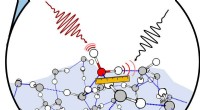
* Increased Energy: The particles in the solid absorb energy, usually in the form of heat. This energy causes the particles to vibrate more rapidly.
* Breaking Bonds: As the particles vibrate more intensely, the bonds holding them together in the rigid structure of the solid weaken and eventually break.
* Increased Spacing: The particles gain enough energy to overcome the attractive forces between them and escape the solid state. They move freely, much like gas particles, with much greater spacing between them.
* Change in State: The particles are now far apart and move independently, exhibiting the characteristics of a gas.
Think of it like this:
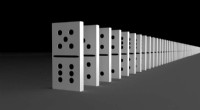
Imagine a tightly packed crowd of people standing still (representing the solid state). As the crowd gets more excited (energy input), people start moving around more (increased vibration), pushing each other apart (breaking bonds), and eventually they become a scattered group moving freely (gas state).
Here are some common examples of sublimation:
* Dry ice (solid CO2) sublimes directly into carbon dioxide gas at room temperature.
* Frozen water (ice) can sublime in cold, dry conditions, leading to frostbite.
* Mothballs slowly sublime, releasing a vapor that repels moths.