The Haber-Bosch process is a chemical reaction that combines nitrogen from the air with hydrogen to produce ammonia. This process is crucial for the production of fertilizers, which are essential for growing food.
Here's how iron acts as a catalyst in this process:
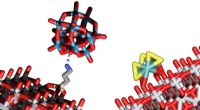
* Increases Reaction Rate: Iron provides a surface where nitrogen and hydrogen molecules can adsorb (attach themselves). This brings the molecules closer together and makes it easier for them to react, increasing the reaction rate.
* Lowers Activation Energy: Iron also lowers the activation energy required for the reaction to occur. This means that the reaction can happen at a lower temperature and with less energy input.
Without iron as a catalyst, the Haber-Bosch process would require much higher temperatures and pressures, making it impractical and expensive.
Let me know if you'd like to know more about the Haber-Bosch process or other applications of iron as a catalyst!