Chemical equations *represent* the real structure, but they are not the structure itself.
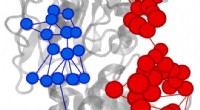
* Real structure: The actual arrangement of atoms and their bonds within a molecule. This is a 3D representation that can be visualized with models or computer programs.
* Chemical equation: A symbolic way of showing what happens in a chemical reaction. It doesn't depict the exact spatial arrangement of atoms but rather the reactants, products, and their stoichiometry (the number of each molecule involved).
Think of it like this:
* A recipe: Tells you what ingredients you need and the process to follow, but not the actual appearance of the finished dish.
* A chemical equation: Tells you what substances react and what substances are produced, but not the exact spatial arrangement of atoms within the molecules.
Examples:
* H2 + O2 → 2H2O: This equation shows that hydrogen (H2) and oxygen (O2) react to form water (H2O). It doesn't show the actual shape of water molecules (bent with two hydrogen atoms and one oxygen atom).
* CH4 + 2O2 → CO2 + 2H2O: This equation shows the combustion of methane (CH4). It doesn't show the tetrahedral shape of methane or the linear shape of carbon dioxide.
Therefore, chemical equations are a simplified representation of chemical reactions. They do not show the actual 3D structure of molecules.
However, there are ways to represent chemical structures in more detail, such as:
* Structural formulas: Show the arrangement of atoms and bonds in a molecule.
* Space-filling models: Depict the relative size and shape of atoms in a molecule.
* Ball-and-stick models: Show the bonds between atoms and their spatial arrangement.
These representations provide a more accurate picture of the real structure of molecules.