1. Molecular Structure:
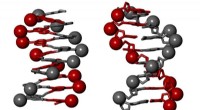
* Solid: Molecules in a solid are tightly packed and arranged in a highly ordered, repeating pattern. The forces holding them together are strong, limiting movement.
* Liquid: Molecules in a liquid are more loosely packed and have more freedom of movement. The attractive forces are weaker, allowing molecules to slide past each other.
2. The Role of Heat:
* Heat Energy: When heat is added to a solid, the molecules absorb the energy and start vibrating faster.
* Overcoming Forces: As the vibrations increase, the molecules overcome the attractive forces holding them in their fixed positions.
* Transition to Liquid: Eventually, the molecules have enough energy to break free from the rigid structure and start flowing past each other, becoming a liquid.
In simpler terms:
Think of the molecules in a solid like tightly packed marbles in a box. To turn the solid into a liquid, you need to shake the box hard enough to make the marbles move around and lose their rigid structure.
Important Note:
The temperature at which a solid changes into a liquid is its melting point. This temperature depends on the type of solid and the strength of the attractive forces between its molecules.