1. Mixing Solutions:
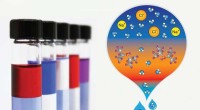
When you mix two aqueous solutions, the ions present in each solution come into contact.
2. Formation of a New Compound:
Some of these ions may react to form a new compound. This reaction is often driven by the formation of a stronger bond between the ions of the new compound compared to the bonds in the original solutions.
3. Insoluble Compound Formation:
The key factor determining precipitate formation is the solubility of the new compound. If the newly formed compound is insoluble in water, it won't dissolve in the solution and will instead form a solid that separates from the liquid phase.
4. Precipitate Formation:
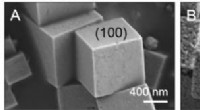
The solid particles of the insoluble compound gather together, forming a visible precipitate.
Example:
Let's consider the reaction between silver nitrate (AgNO₃) and sodium chloride (NaCl) solutions:
* AgNO₃ (aq) + NaCl (aq) → AgCl (s) + NaNO₃ (aq)
In this reaction, silver ions (Ag⁺) from silver nitrate react with chloride ions (Cl⁻) from sodium chloride to form silver chloride (AgCl), which is insoluble in water. The silver chloride precipitates out as a white solid, while the sodium nitrate (NaNO₃) remains dissolved in the solution.
Factors Affecting Precipitation:
* Solubility Rules: General rules help predict the solubility of ionic compounds, but there are exceptions.
* Concentration: Higher concentrations of reactants increase the likelihood of precipitate formation.
* Temperature: Solubility of most solids increases with temperature, so cooling the solution can promote precipitation.
Applications:
Precipitation reactions are used in various applications, including:
* Chemical analysis: To identify and quantify substances.
* Water treatment: To remove impurities like heavy metals.
* Synthesis of new materials: By carefully controlling the reaction conditions, desired precipitates can be formed.
In Summary:
Precipitates form when two aqueous solutions are mixed because a chemical reaction leads to the formation of an insoluble compound that separates out of the solution as a solid. The driving force behind this process is the formation of a stronger bond between the ions in the new compound, making it less soluble in water.