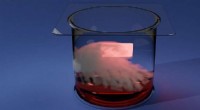
1. Increased Kinetic Energy: Heat energy is transferred to the liquid particles, causing them to vibrate and move faster. This is known as increased kinetic energy.
2. Greater Spacing: As the particles move faster, they collide more frequently and with greater force. This causes them to spread out, increasing the average distance between them. The liquid expands slightly as a result.
3. Weakening of Intermolecular Forces: The increased kinetic energy also weakens the attractive forces (intermolecular forces) that hold the particles together. This means the particles are less tightly bound and can move around more freely.
4. Change in State: If the liquid is heated enough, the particles will gain enough kinetic energy to overcome the intermolecular forces entirely. At this point, the liquid changes state from liquid to gas (evaporation or boiling).
Here's a simple analogy: Imagine a crowded dance floor with people standing close together. As the music gets louder and faster (heat energy), the people start dancing more vigorously (increased kinetic energy). They bump into each other more often, causing them to spread out a bit (greater spacing) and move more freely (weakening of forces). If the music gets loud enough, people might start jumping around so much they leave the dance floor altogether (change of state).
Important Note: The exact changes and the temperature at which they occur depend on the specific liquid and its properties. For example, water boils at 100°C, while ethanol boils at 78.37°C.