Similarities:
* Solid State: Both amorphous and crystalline solids are rigid and have a definite shape and volume. This means their molecules are tightly packed and have limited movement.
* Intermolecular Forces: Both types of solids rely on intermolecular forces, such as van der Waals forces, hydrogen bonding, and ionic bonds, to hold their molecules together.
* Can Be Rigid and Strong: Both can exhibit significant rigidity and strength, depending on the specific material and the nature of the intermolecular forces.
Key Difference:
The primary difference lies in the arrangement of their molecules:
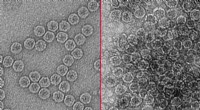
* Crystalline Solids: Have a highly ordered, repeating three-dimensional structure. This order extends throughout the entire solid.
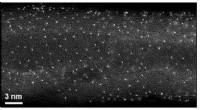
* Amorphous Solids: Lack a long-range, ordered structure. Their molecules are arranged randomly or in short-range order.
In Summary: Both amorphous and crystalline solids are in a solid state and are held together by intermolecular forces. However, crystalline solids exhibit a well-defined, long-range order, while amorphous solids lack this long-range order and have more random molecular arrangements.