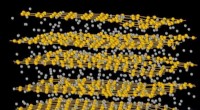
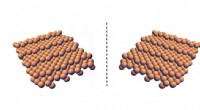
* Structure: Carbon nitride typically exists in a layered structure similar to graphite. The carbon and nitrogen atoms are connected in a planar hexagonal network, with each carbon atom bonded to three nitrogen atoms and each nitrogen atom bonded to three carbon atoms.
* Electronegativity: While nitrogen is more electronegative than carbon, the symmetrical arrangement of these atoms within the hexagonal rings leads to a cancellation of dipole moments.
* Overall Polarity: The equal and opposite polarities within each hexagonal ring result in a non-polar molecule overall.
In contrast, if the structure of carbon nitride was different, with asymmetrical arrangement of carbon and nitrogen atoms, it could potentially be polar.
Important note: While carbon nitride itself is not polar, it can form polar functional groups on its surface, like amino groups (NH₂), which can contribute to its overall polarity in specific applications.