Here's a breakdown:
High Entropy:
* Disorder: Substances with high entropy are characterized by a high degree of disorder. This means their particles have more freedom to move around and take on different arrangements.
* Examples:
* Gases: Gas molecules have a high degree of disorder, moving randomly and freely in all directions.
* Liquids: Liquid molecules have less freedom than gases, but still move relatively freely and can take on different arrangements.
* Solutions: A mixture of substances, like salt dissolved in water, has higher entropy than the separate pure components.
* Complex molecules: Large, complex molecules with many possible conformations have higher entropy than simple, rigid molecules.
Low Entropy:
* Order: Substances with low entropy are characterized by a high degree of order. Their particles are tightly packed and restricted in their movement.
* Examples:
* Solids: Solid molecules are tightly packed in a fixed arrangement, making them highly ordered.
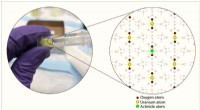
* Crystals: Crystals are highly ordered, with a repeating arrangement of atoms or molecules.
* Simple molecules: Small, simple molecules with limited conformational flexibility have lower entropy.
Factors affecting Entropy:
* Temperature: Increasing temperature increases the kinetic energy of particles, causing them to move more and increasing entropy.
* Volume: Increasing volume provides more space for particles to move around, leading to increased entropy.
* Number of particles: More particles in a system lead to more possibilities for arrangement and thus higher entropy.
In summary, the more disordered a substance is, the higher its entropy. The more ordered a substance is, the lower its entropy.